
Protecting bats through community partnership in Pinnacles National Park
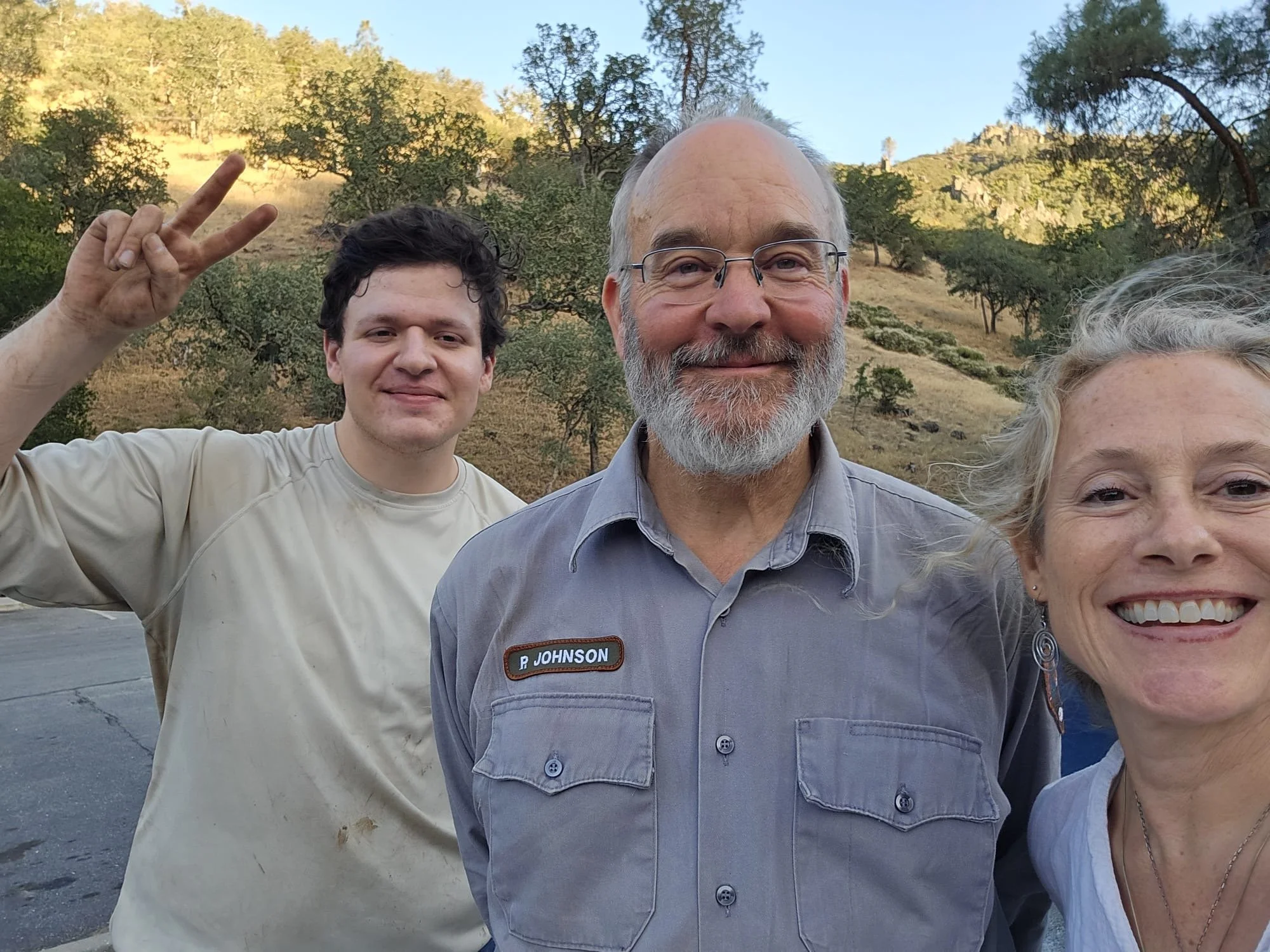
At Pinnacles National Park, stewardship is strengthened by a diverse network of park staff, students, researchers, and volunteers working toward shared goals. As part of the NSF Center for Pandemic Insights' (NSF-CPI) ongoing community engagement efforts at this site, NSF-CPI Associate Director Dr. Karen Saylors partnered with Pinnacles National Park wildlife biologist Paul Johnson and Gavilan College volunteer Ricky Morrow to help protect one of the park's maternity colonies of Townsend's big-eared bats.
Pinnacles National Park is home to a remarkable network of talus caves, likely formed during the last ice age when large volcanic boulders broke away from canyon walls and tumbled into narrow stream canyons, creating a maze of subterranean hollows and tunnels. These natural rock formations provide ideal roosting habitat for Townsend's big-eared bats, but their many openings also tend to interest curious park visitors and climbers. Because Townsend's big-eared bats are a protected species, the National Park Service closes portions of the cave system during sensitive periods, including the summer maternity season when females give birth and raise their pups. To provide additional protection for one of these maternity colonies, our team worked together to install a barrier at one of the cave's potential human entry points.
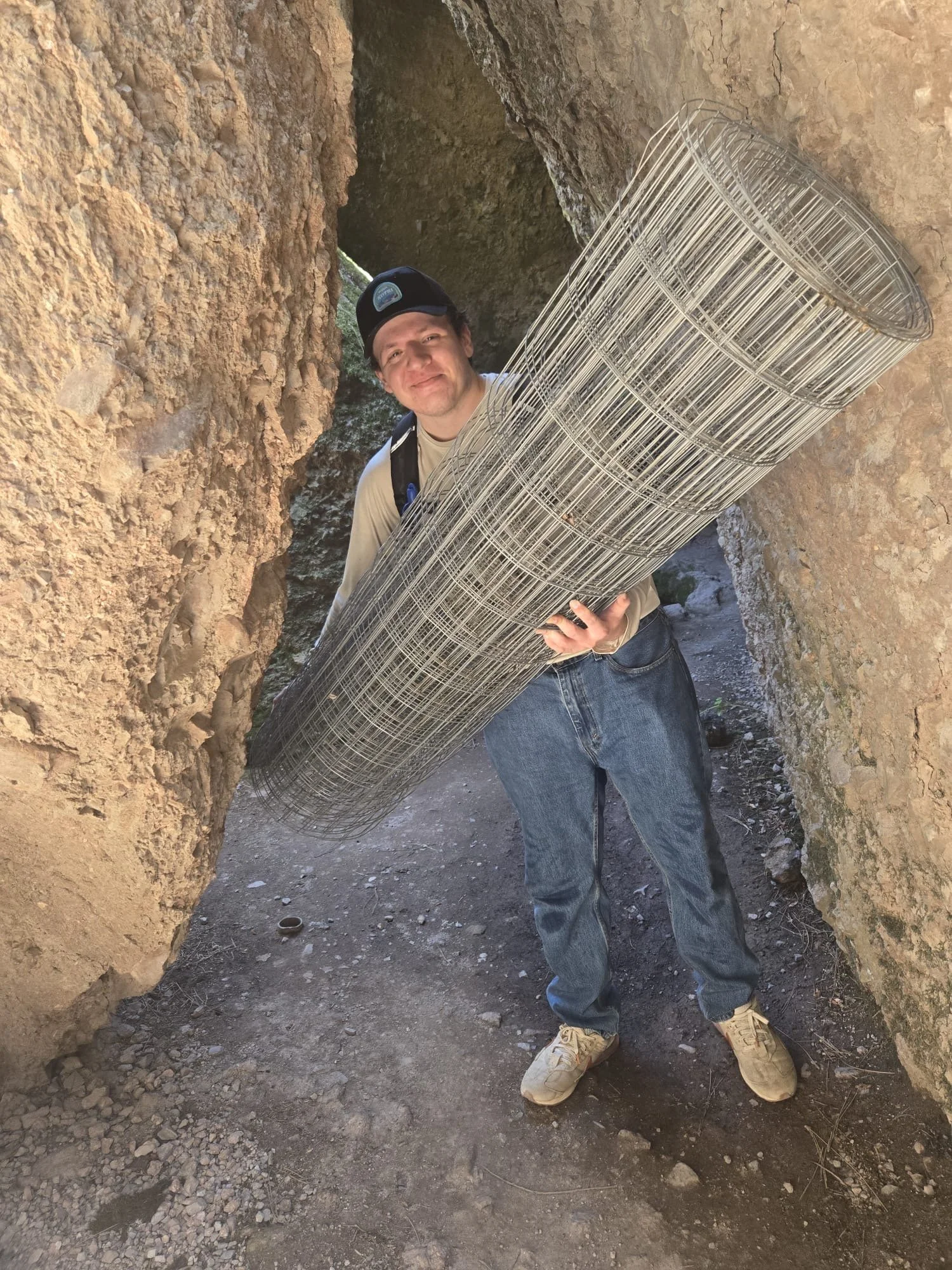
Last month, our team worked together to determine the best way to install a fence that would keep visitors out of the cave without blocking the bats as they returned to roost each evening. We spent the afternoon designing and building the fence, as well as constructing a rock basket to anchor it securely in place. Finding the best way to stabilize the structure required plenty of trial and error, creative problem-solving, and more than a little crawling through tight spaces between the boulders.
Projects like this provide valuable opportunities for students to gain hands-on experience in conservation alongside park staff and researchers. This summer, NSF-CPI welcomed two Summer Interns, including Gavilan College student Ricky Morrow, who assisted with this cave fencing project. Throughout the summer, Ricky will continue working with Pinnacles National Park staff and NSF-CPI to develop interpretive materials for a self-guided trail experience. Through this work, he will help create updated educational resources that showcase the park's incredible biodiversity while advancing shared goals of conservation, community engagement, and participatory research.
Projects like this demonstrate that conservation extends beyond scientific research. By bringing together park staff, students, volunteers, and researchers, NSF-CPI is helping protect critical wildlife habitat while strengthening the partnerships that make long-term conservation possible.