NSF-CPI collaborations with The Marine Mammal Center
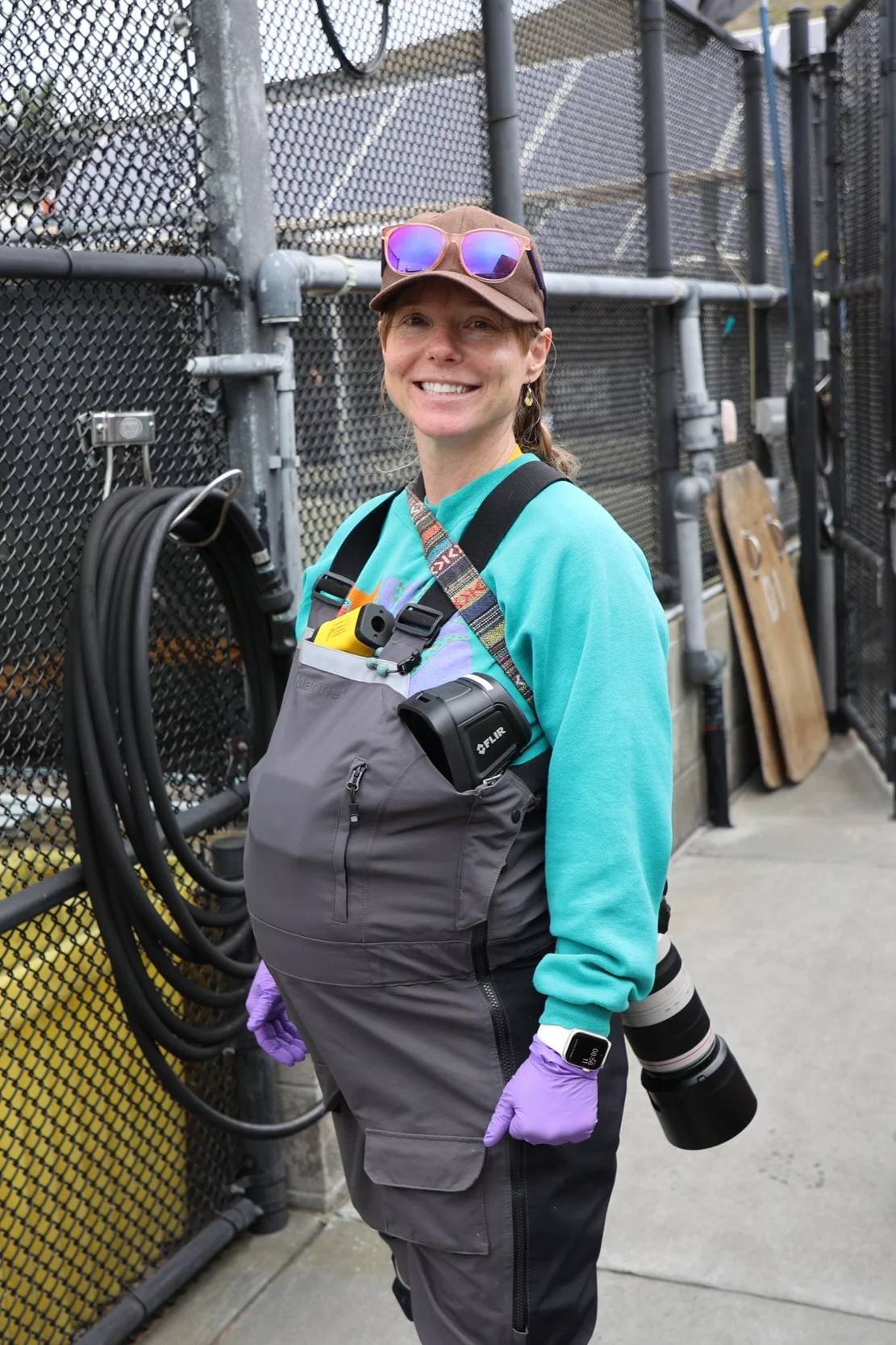
By Sarah Lagattuta (Field Research Fellow) and Dr. Jillian Armstrong (Postdoctoral Scholar)
Scalable, non-invasive wildlife surveillance is central to CPI’s mission, especially for species and ecosystems under threat by zoonotic diseases. The Marine Mammal Center’s hospital and visitor center based in Sausalito, California, treats up to 1,800 sick and injured seals, sea lions, sea otters, and other marine mammals each year, and this team has become a key partner in advancing CPI’s work. In collaboration with Dr. Cara Field (Director of Conservation Medicine), Dr. Emily Whitmer (Clinical Veterinarian) and the rest of the Center’s team, CPI post-doc Dr. Jillian Armstrong and Field Research Fellow Sarah Lagattuta are exploring new ways to screen for febrile illness in marine mammals.
Current best practices for detecting fever in marine mammals require a rectal thermometer, which can be distressing for these wild animals when awake.
But, what if you could take an animal’s temperature without touching it? And how could you possibly achieve that if the animal is wrapped in layers of blubber and fur designed to protect it from freezing in the open ocean?
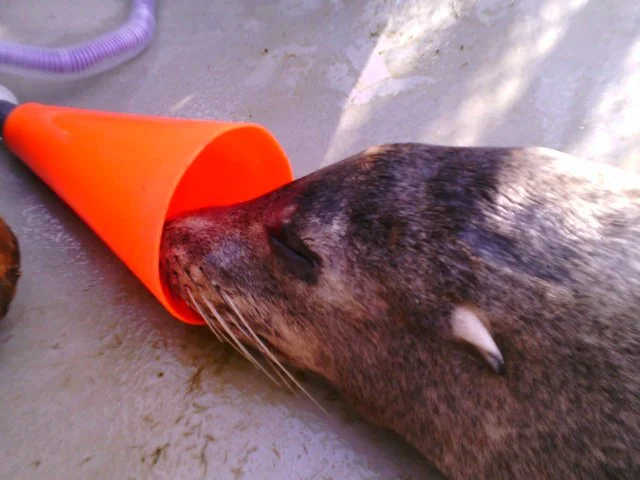
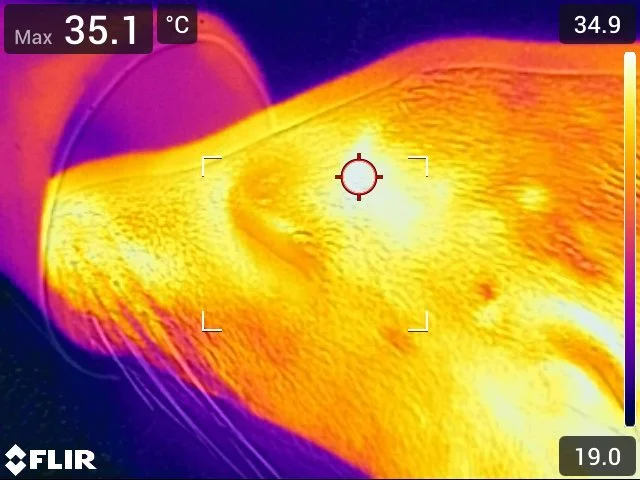
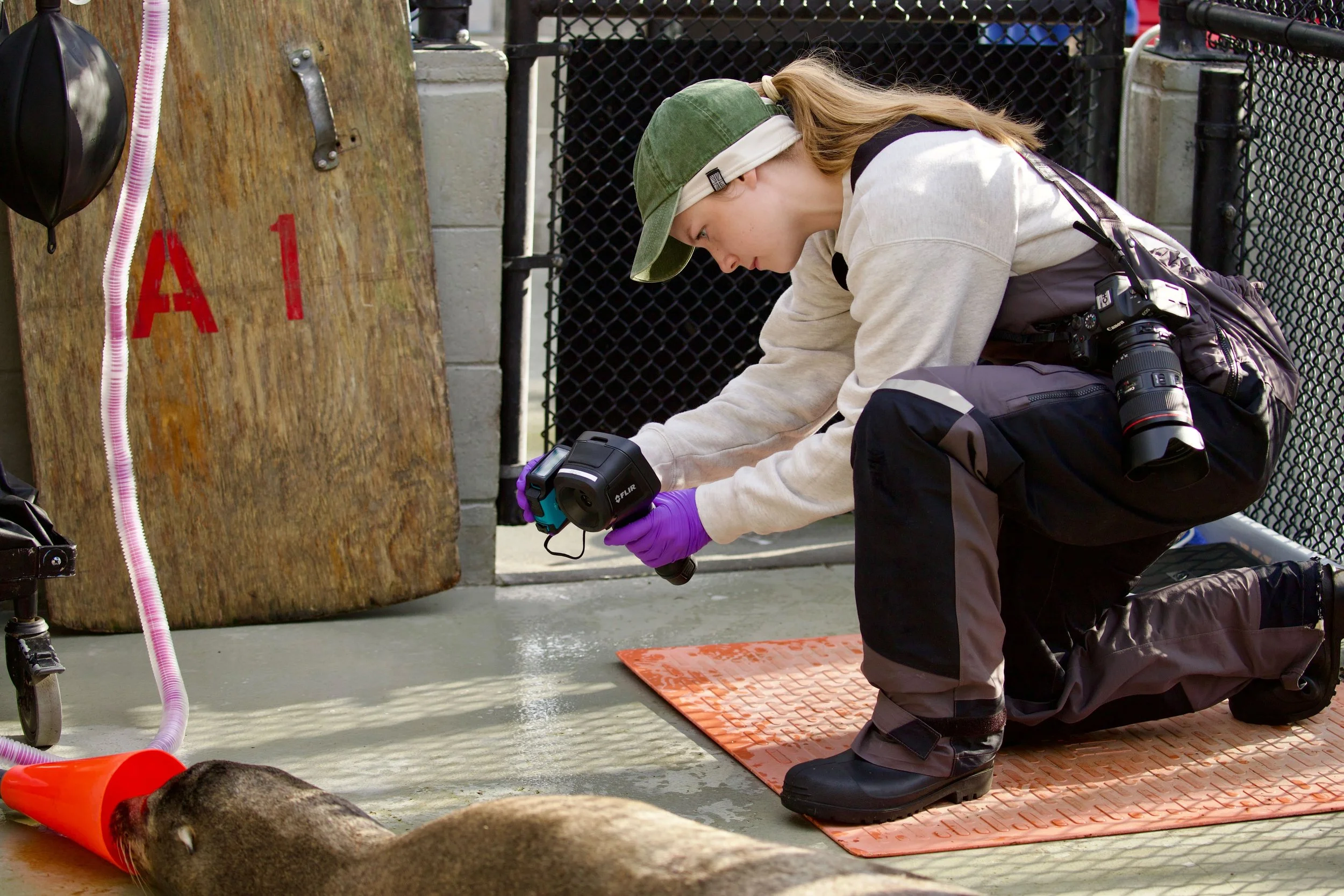
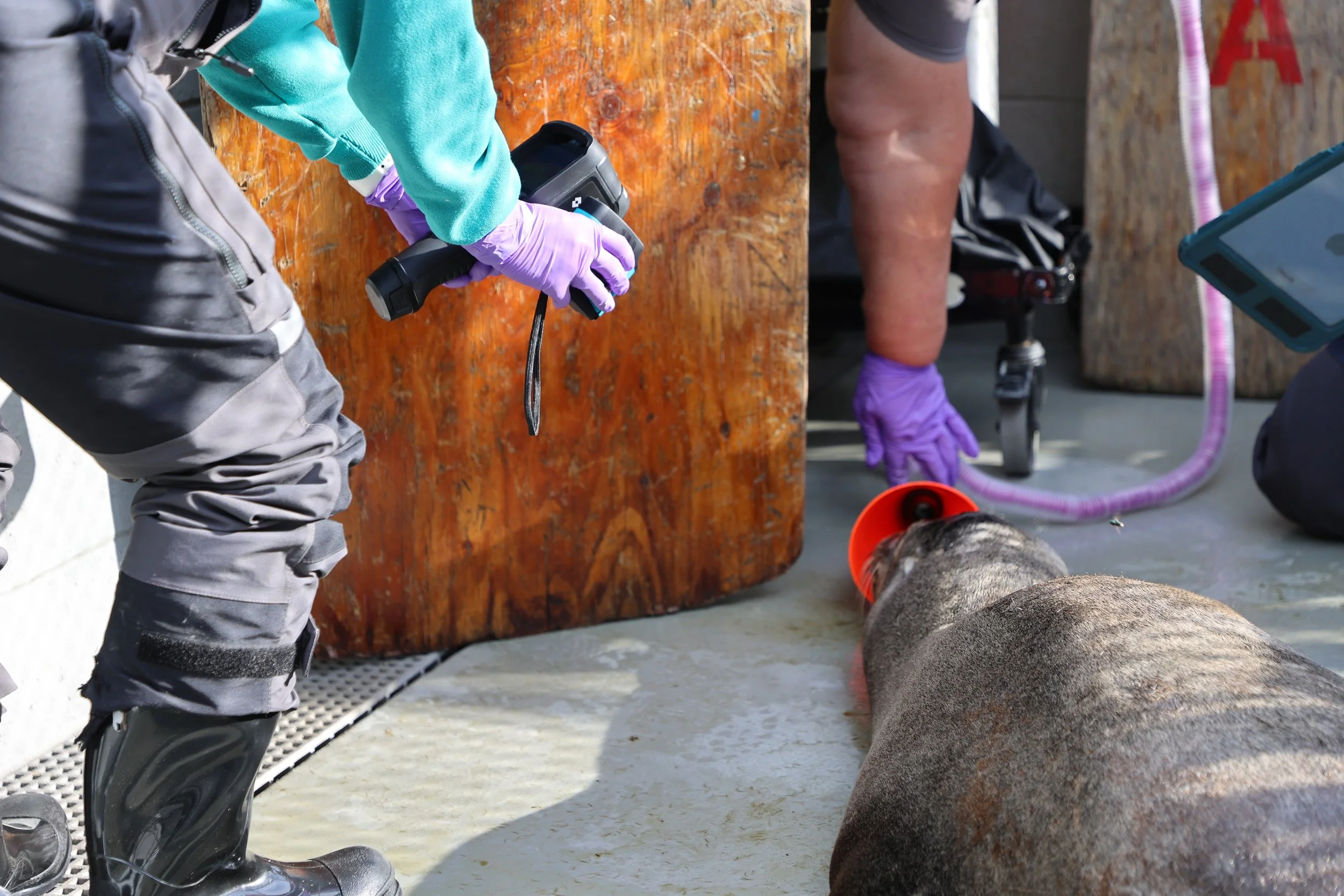
To tackle this, our team is testing the use of radiometric thermal cameras to estimate an animal’s internal temperature from afar. Unlike standard infrared thermometers that report relative temperature, radiometric thermal imaging provides an actual temperature value for every pixel in the frame. Our goal is to use these precise heat values in key anatomical locations to model internal body temperature without requiring contact.
In the long-term, we plan to scale these methods to wild populations, allowing researchers and veterinarians to screen marine mammals for fever without relocation, sedation, or additional stress. Early fever detection could help identify outbreaks of diseases such as highly pathogenic avian influenza (H5N1) before they spread, protecting both marine wildlife and the ecosystems connected to them.
This project has also fostered incredible collaboration between CPI scientists, wildlife veterinarians, and animal care staff. Early mornings in Sausalito with a fresh layer of fog and sea lions chattering in the distance have become a highlight for the team. We are excited to see where this work leads and how it might help safeguard marine wildlife in the years ahead.